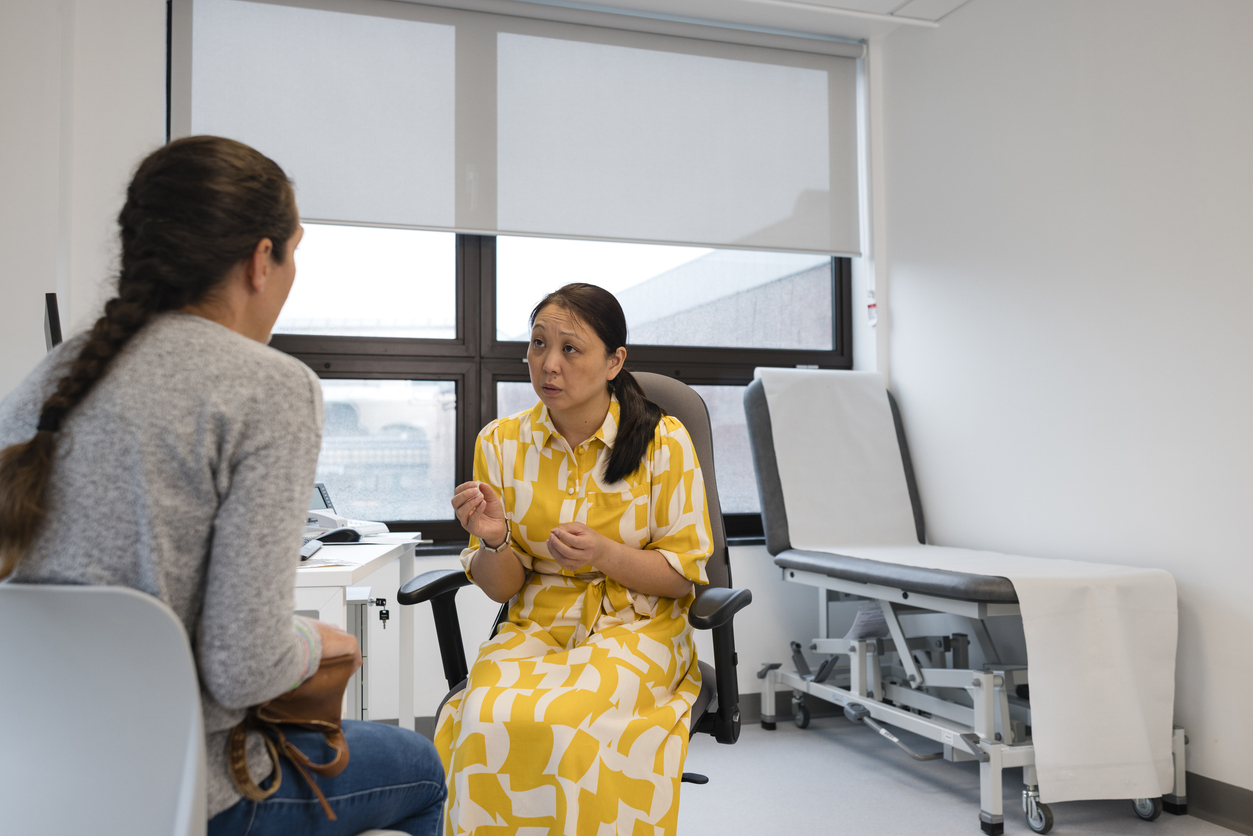
Uncovering how and why differential diagnosis is made, communicated, and recorded in acute care

Understanding what a patient’s symptoms mean, giving advice to the patient on managing them, and explaining what comes next, is at the heart of the clinical encounter. While doctors are taught how to diagnose, there isn't consistency on how they apply that teaching or in how they communicate information back to patients. THIS Institute wanted to understand the variations in patient-doctor communications, and why individual clinicians chose to communicate certain levels of information.

Participants
36 clinicians from 5 hospitals participated in an initial written vignette study. 100 members of the public took part in a subsequent patient video vignette study.
Methods
Written vignettes, semi-structured interviews, video vignettes, online qualitative surveys.
Impact
Kick-starting conversations in academic research around patient-doctor communication and producing tools to help other researchers continue important work in this area of healthcare.

Delivered on behalf of:

What we did

  • Developed accessible scripts for videos relating to two different sets of symptoms - either a headache, or a change in bowel habits
  • For each symptom we wrote two alternative scripts - one where the doctor explained the possible diagnosis with more information, and one where they explained it with less
  • Scripts were user-tested with 15 members of the public and refined before the vignette videos were filmed
  • Considered and implemented a 'washing out' exercise between videos to avoid patients bringing opinions from an earlier video to a later one
  • Randomly showed vignette videos to participants, one for each condition, either giving them more information or less

Key insights

This work identified that patients on the whole prefer to hear more information rather than less, even if that greater detail makes them marginally more anxious.

The earlier study had found that doctors believed withholding information would reduce anxiety, but the patient vignette study showed that patients still wanted to know what was happening with their bodies.

Improvement in action

This project delivered clear results to inform THIS Institute’s next steps.

The team has contributed significantly to academic literature on the subject of patient-doctor communications, as well as providing guidance and recommendations for other researchers in this area.

"Thiscovery were able to think through all sorts of issues - and resolve them - that I hadn’t considered for an online study. They brought a fresh perspective and professionalism which was incredibly useful."

Share client story
Link copied

Other client stories for you to read

No items found.